
Sunroof & Panoramic
Roof Tinting
That giant piece of glass overhead looks great. It also turns your car into a greenhouse. Here’s how tinting fixes that — without touching the view.
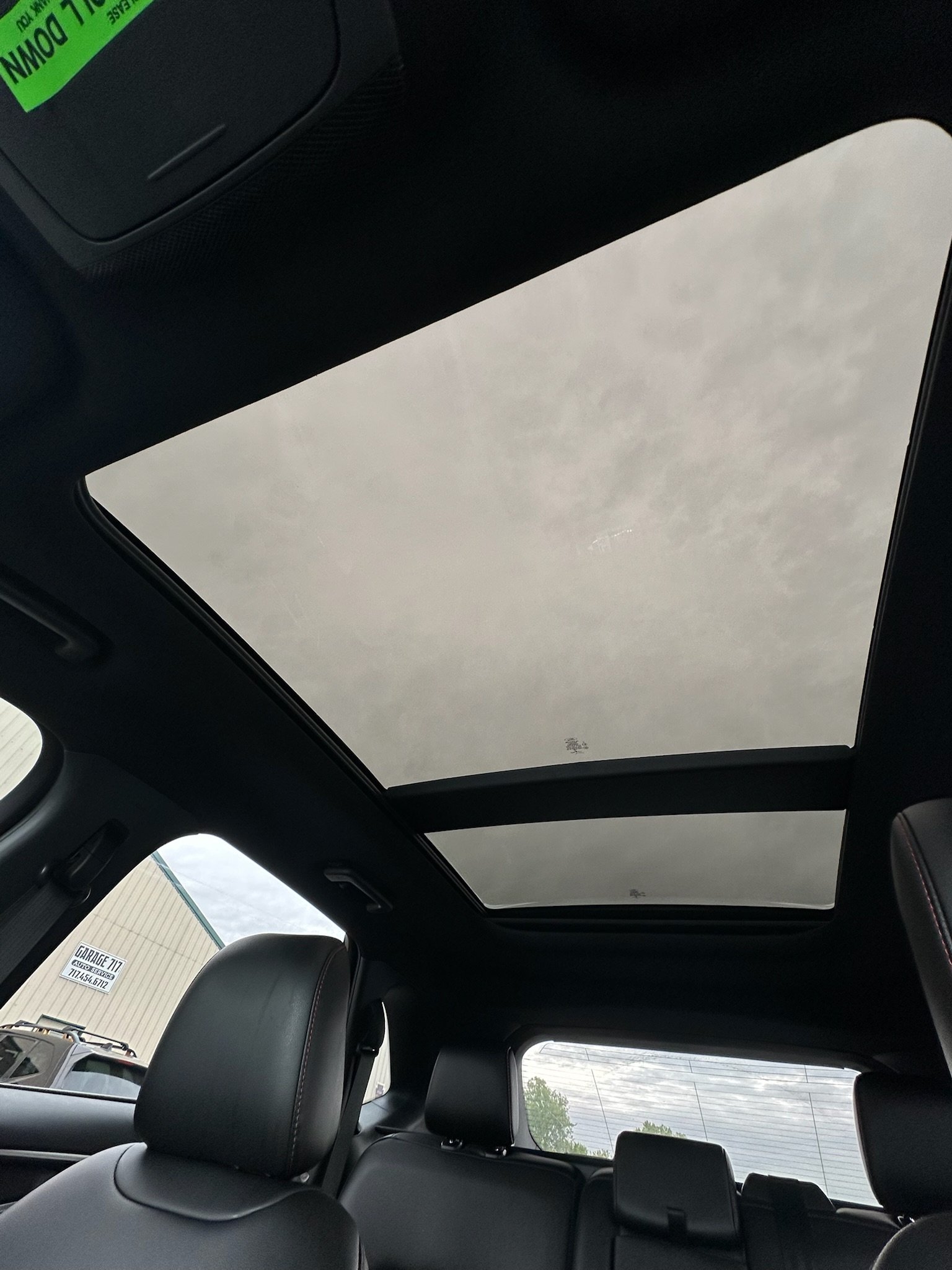
Before: full overhead glare, no UV protection
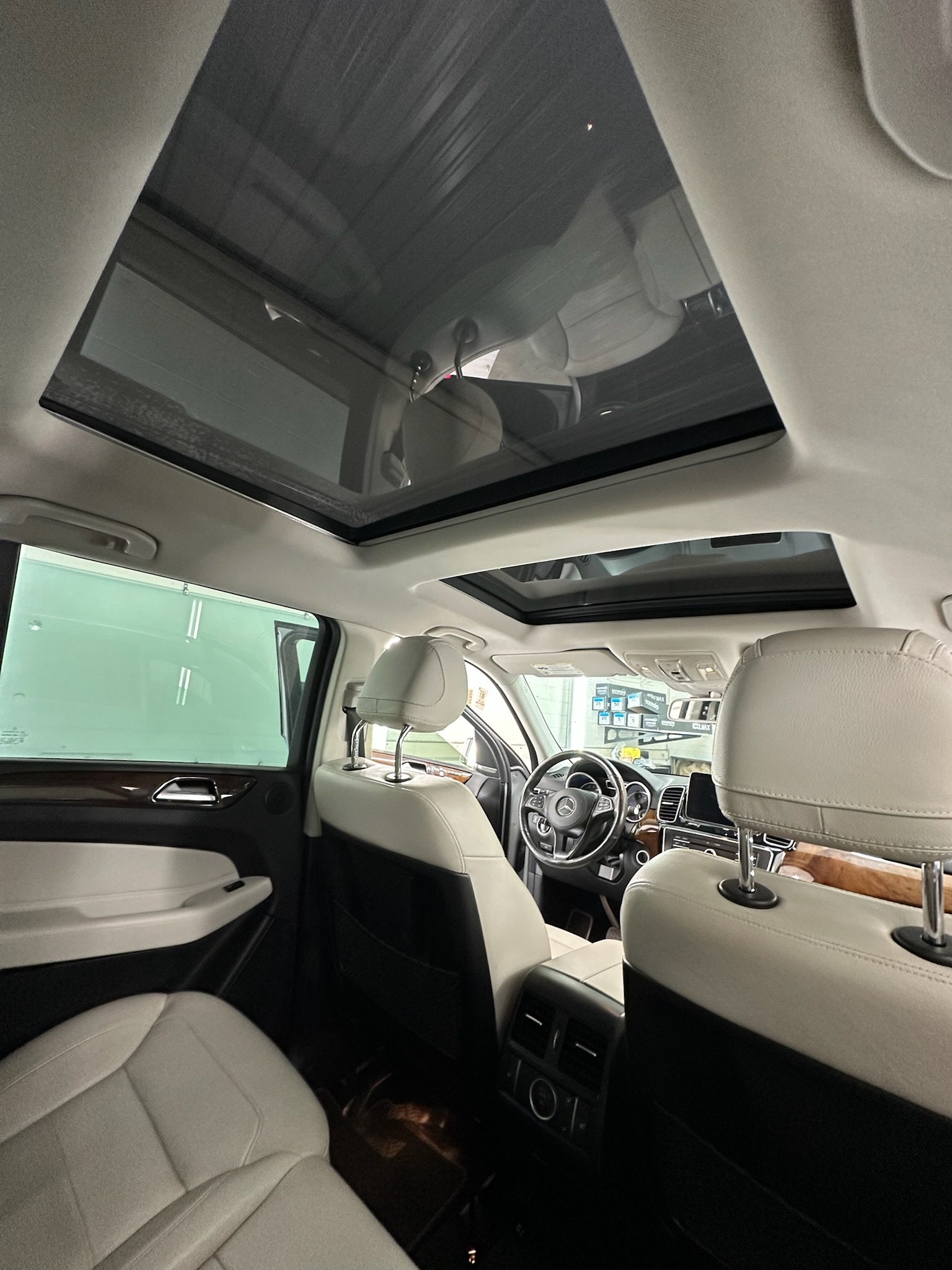
After: ceramic film, same view — 60% less heat
Panoramic roofs and sunroofs are one of the most-requested add-ons when people buy a new car. They’re also one of the most overlooked tinting jobs. That overhead glass doesn’t just let in light — it’s your single biggest source of solar heat gain in the cabin, and it hits every passenger equally.
At Garage 717 we tint sunroofs and panoramic glass roofs regularly. This post covers what’s actually different about tinting overhead glass, which film type makes sense, whether it’s legal in PA, and what the process looks like. Short answer: it’s one of the best installs you can do for cabin comfort.
“The roof glass on a modern SUV can be larger than all four door windows combined. Leaving it untinted while tinting the sides is like putting sunscreen on your arms and skipping your face.”
Sunroof vs Panoramic Roof: Different Glass, Same Problem
People use these terms interchangeably, but they’re different configurations. Both get the same tinting treatment at Garage 717 — the film type and install process don’t change — but the glass area and heat load are very different.
Sunroof
Panoramic Roof
The panoramic roof problem is especially bad in SUVs and crossovers. The rear glass panel sits directly over rear-seat passengers — the people who can’t control the A/C. On a summer afternoon in Lebanon County, that’s the worst seat in the vehicle. Tinting that rear panel makes an immediate, obvious difference.
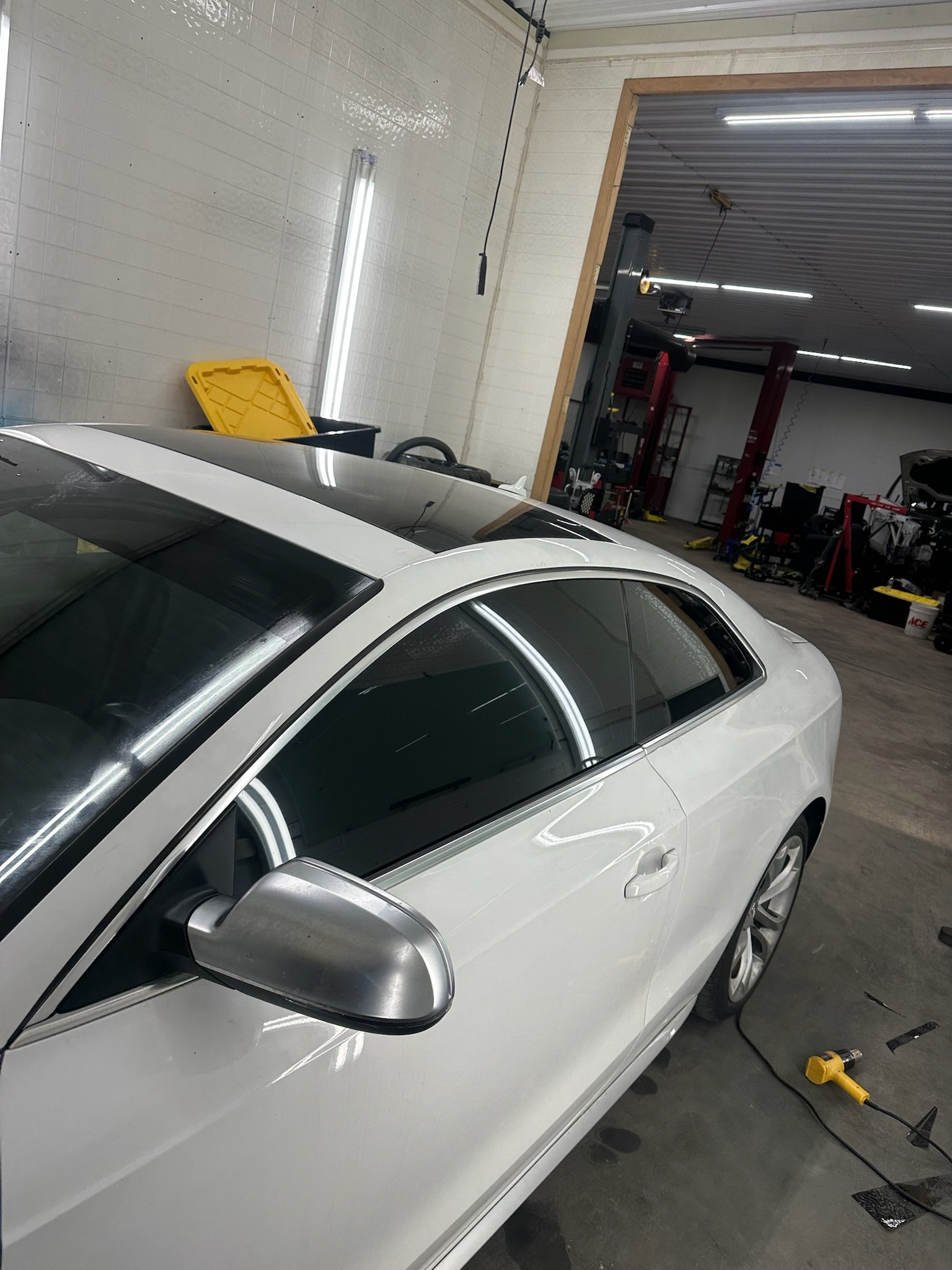
Why rear passengers feel it most
On most panoramic roof SUVs, the rear glass panel is larger than the front. It’s fixed — it doesn’t open, it just sits there collecting solar radiation directly above the back seat. Kids and rear passengers absorb that heat before the A/C can compensate. Ceramic tint on the rear panel cuts that by up to 60% before you turn the fan up.
Which Film Type for a Roof Panel
Overhead glass has a stronger case for ceramic than side windows do. Here’s why: the angle. Side glass sees sun at an oblique angle. Roof glass faces the sky directly at 90 degrees for most of the day. That’s the maximum possible solar exposure. Carbon film is a solid performer for side windows. For roof glass, ceramic earns the price difference immediately.
Carbon Tint
Ceramic Tint
If you’re doing a full vehicle install, we typically recommend ceramic on the roof glass and carbon on the side windows. You get maximum overhead heat rejection where it matters most, with the cost-to-performance balance on the sides. We can also match shades so everything looks consistent from inside and out.
For Tesla Model Y and Model X owners — the all-glass roof is the primary reason people book with us. See our Tesla tinting page for the full breakdown of roof glass, side windows, and PA legal requirements for Tesla classifications.
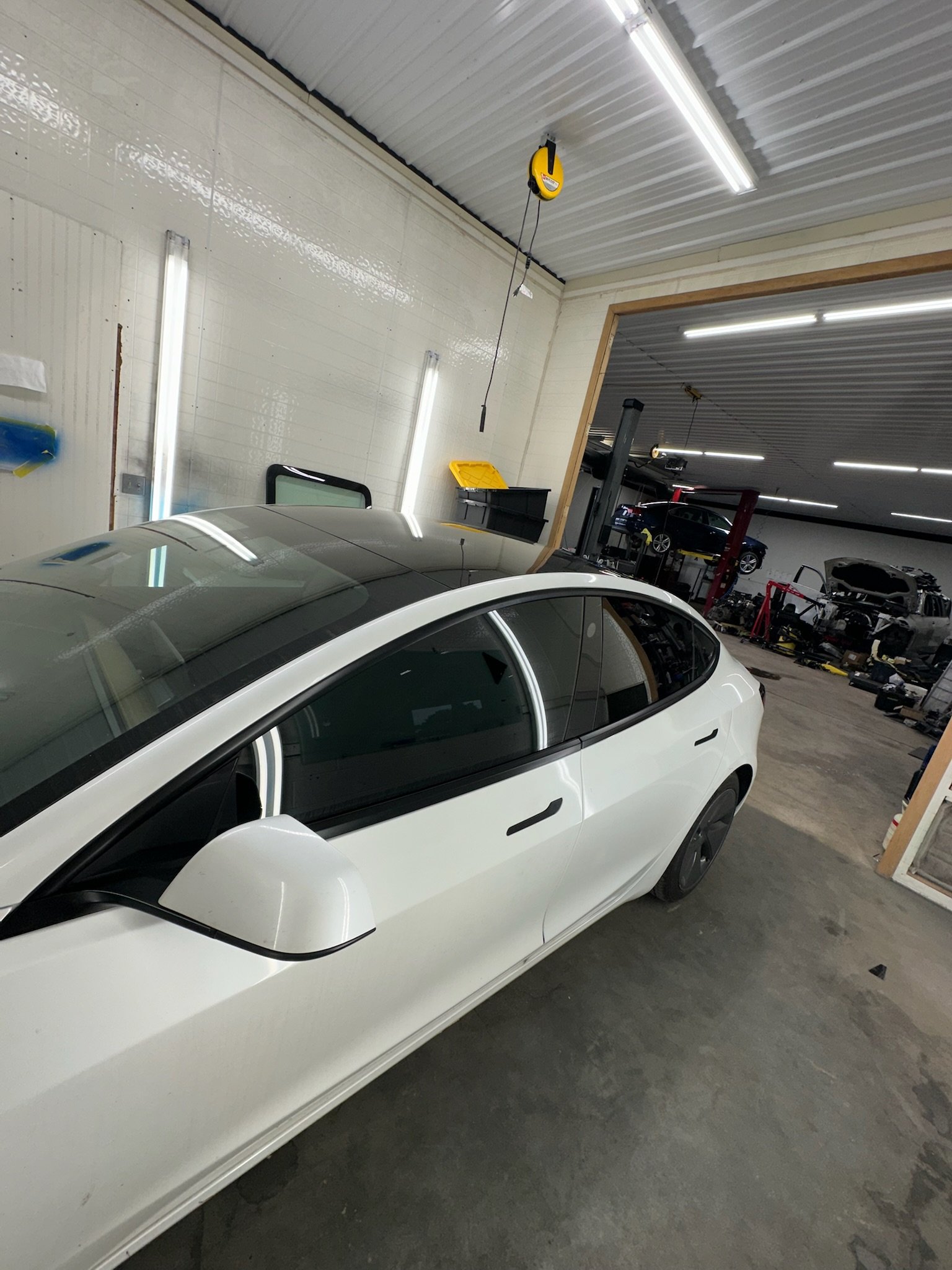
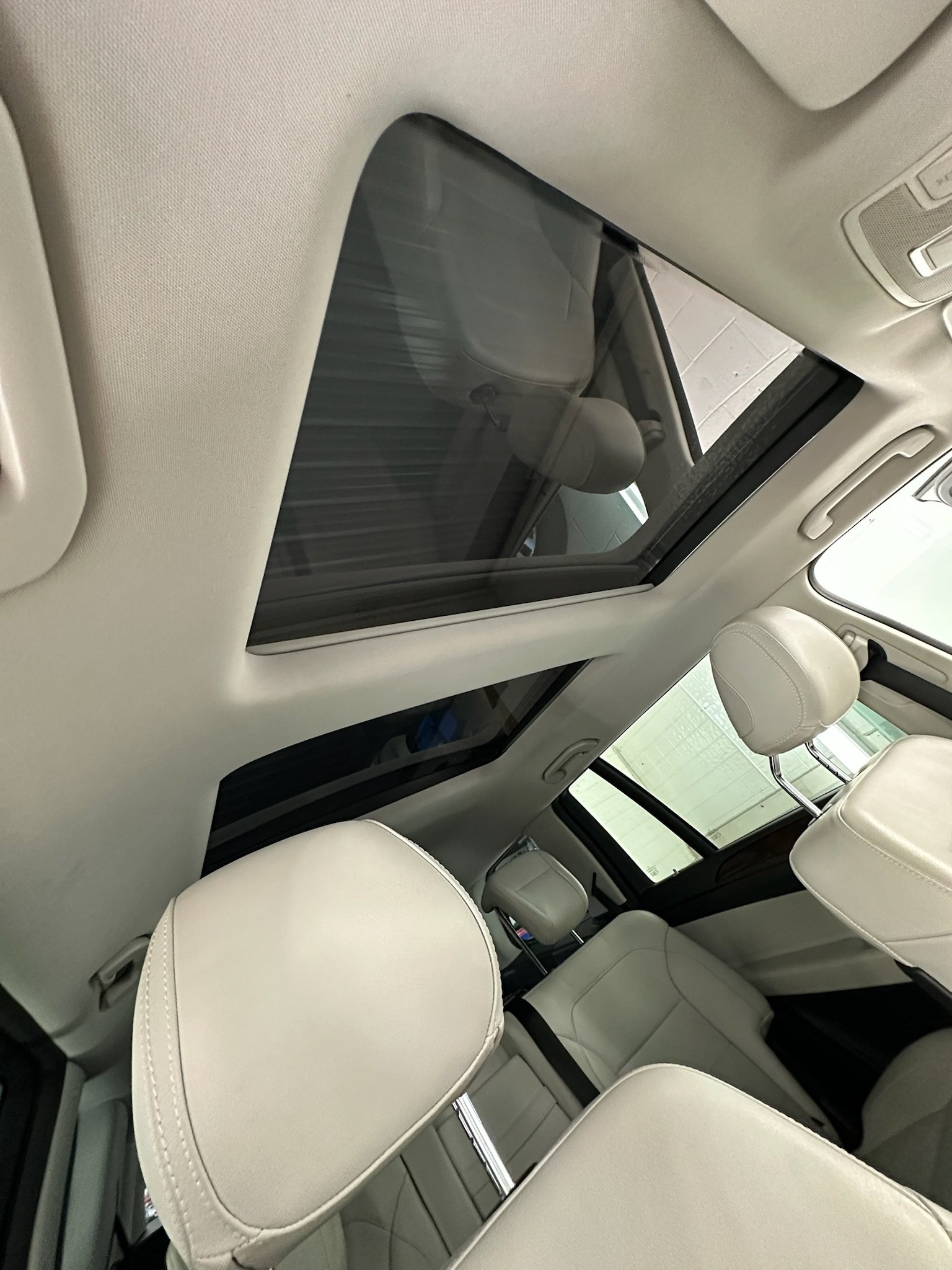
Completed panoramic install — interior view
Before install — full overhead glare
After ceramic — same view, dramatically less heat
Is Roof Tinting Legal in Pennsylvania?
Pennsylvania’s tint law (75 Pa. C.S. Section 4524) applies to windows required for driving visibility — specifically the front windshield and front side windows, which must be 70% VLT or higher.
Sunroofs and panoramic roof panels are not classified as required-visibility windows under PA law. There is no VLT restriction on roof glass. You can go as dark as you want on a sunroof or panoramic panel, including a near-opaque blackout film.
In practice, most owners don’t go fully opaque on roof glass because they like having the daylight. The sweet spot is usually a medium shade that kills the heat and UV without making the cabin feel like a cave. We’ll show you sample VLT levels in person before we start so you know exactly what to expect.
For the full PA tint law breakdown, including what the front window rules mean in practice and what happens during inspection, see our PA tint laws page.
What the Install Actually Looks Like
Sunroof and panoramic roof installs are more technical than side windows. The glass is curved, often larger than any single side window, and the trim removal varies by vehicle. We’ve done enough of these to have efficient processes for the common configurations.
- Computer-cut template: We use exact-fit templates for your make, model, and year. No freehand cutting on the glass. Clean edges to the frame every time.
- Trim handling: Some panoramic roofs require removing interior trim pieces to get clean edge wraps. We handle this carefully and reinstall everything correctly.
- Dust-free environment: Our booth is the same for roof installs as side glass. Overhead installs are especially sensitive to dust — one particle under the film and it’s visible from inside every time you look up.
- Cure time: Roof glass cures at the same rate as side windows — typically 3–5 days. You may see small water bubbles during this period. They go away completely.
- Warranty: Ceramic and carbon roof installs carry the same lifetime manufacturer warranty as all our other work. Bubbling, peeling, color change — covered.
Who Should Tint Their Roof Glass
Most people who come in for a full vehicle tint have never thought about the roof. Once we mention it, it’s an easy yes. But there are specific situations where it’s the first thing you should do.
- You have kids in the back seat who complain about heat or sun in their eyes
- You drive a Tesla Model Y, Model X, or any vehicle with a full glass roof
- Your back seat passengers have no A/C vents directly above them
- You have leather seats or a light-colored interior that fades from UV
- You park outside all day and the car is unbearably hot when you get back in
- You notice glare on your dashboard from overhead sun even with side windows tinted
Questions About Roof Tinting
Not significantly, especially at moderate VLT levels like 35–50%. The difference is in heat and glare — the light still comes through, it just doesn’t cook you. We can show you sample films in person so you know what the tint level looks like before we install anything.
Yes. Tinting a sliding sunroof is a standard install. The film goes on the glass, not the frame, so it doesn’t affect the mechanism. We account for the opening edge during installation so the film doesn’t peel when the sunroof opens and closes.
Panoramic roof tinting is priced based on the total glass area and film type. It’s typically an add-on to a full vehicle tint or a standalone service. See our pricing page for ranges, or call us at (717) 454-6712 for a quote on your specific vehicle.
No. Ceramic film is optically clear — it doesn’t add a haze or distortion. The color is the same as carbon tint at the same VLT level. The performance difference is in heat rejection and UV blocking, not in how the glass looks.
Yes. Front and rear panels are separate pieces of glass and we can tint them independently. Tinting just the rear panel is a common request for vehicles where rear-seat heat is the main complaint. We can also use different shades on front vs rear if you want more light up front.
Yes — Tesla is one of our most common roof tinting jobs. Model Y and Model X have large glass roofs that come from the factory with minimal heat protection. We do the full roof glass as part of our Tesla tinting service, typically with ceramic for maximum heat management.
UV radiation through roof glass reaches passengers at nearly perpendicular angles, maximizing skin exposure. The Skin Cancer Foundation notes that standard auto glass blocks UVB but transmits significant UVA. Ceramic window film at Garage 717 blocks up to 99% of both UVA and UVB through roof and side glass.
Related: Ceramic tint • Tesla tinting • PA tint laws • All vehicle types • Pricing • Book appointment
Stop Cooking Your Passengers
Same-day installs. Lifetime warranty on ceramic and carbon. Serving Lebanon, Lancaster, Berks, and Dauphin counties from Myerstown, PA.
Book same-day appointment → See pricing →